
About The Canadian Passages Project
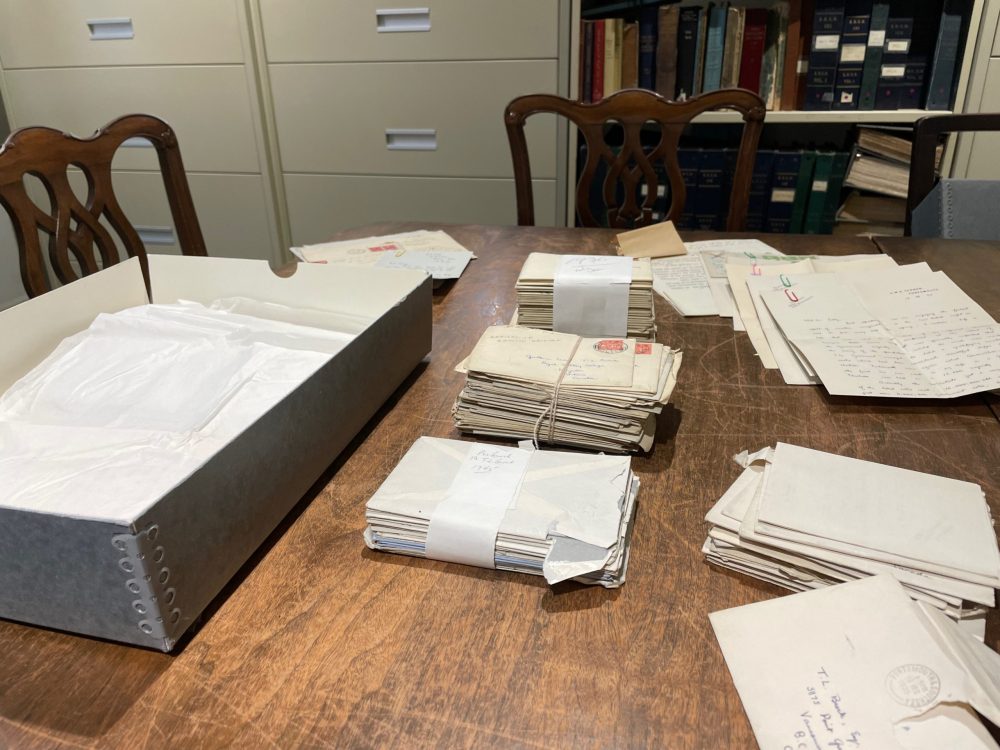
This project began with materials resting quietly in the archives of the Canadian Forces Base Esquimalt Naval & Military Museum. The museum takes in donations of possessions from navy personnel, which may contain letters, diaries, essays and photographs, both official and personal. Hidden amongst these documents can be richly preserved stories awaiting discovery.
Museum staff and volunteers are uncovering these narratives, which have been held in trust, often for decades, in the hopes of sharing them with the world. The challenge is finding a way to reach modern audiences in an easily accessible way. Audio bridges the gap between dusty papers long out-of-view and the light of the present day. By using digital text-to-voice technology, we reawaken the words of these writers and share collections that hold our collective history in their pages.
Audio: The Key to Unlocking Forgotten Stories
Hearing the words read aloud lets listeners connect with the past on a much deeper, emotional level. Historical writings become vibrant and immediate, transcending the distance of time and the formality of the written word. Our goal is to extend the museum experience beyond physical boundaries enhancing engagement.
Audiocasts encourage a different kind of engagement. Listening fosters focus and imagination, letting the stories unfold within the mind’s eye. This format complements traditional research by adding an auditory dimension, making the study of history not just an intellectual pursuit but a profound personal experience.
Audio significantly enhances accessibility. For those with visual impairments, reading difficulties, or simply busy schedules, listening offers a flexible way to engage with rich historical content. These portable narratives are perfect for commutes, walks, or moments of reflection, opening up archives to a wider, more diverse audience.
The Process
Step 1
The first step in creating an audiocast is to find suitable archival material. Not every collection or fond contains letters, diaries or essays. Locating compelling writing that has relevance involves hours of scouring the archives and reading content.
Step 2
Once archival documents have been selected, they are scanned and then transcribed using optical character recognition. Even with today’s technology, the resulting transcripts must be carefully compared to the original material and edited to match.
Step 3
When specific narratives have been chosen for production, research is carried out to understand the writer's life, the meaning of the words and the context of the time period. Introductions and explanations are written for the passages.
Step 4
The scripts are then prepared for conversion to audio, often involving a tedious process of trial & error for pronunciation (phonetic spelling is often key). All outputs are compiled and exported into a format that can be published online.
Step 5
Photographs are collected to illustrate the content. A slide show is prepared using the images, and the audio is embedded. The combined program is exported in movie format, which is uploaded to YouTube.
Project Stewardship, Collaboration & Funding
Project Lead & Producer
Canadian Passages is a volunteer-driven initiative produced and managed by K.M. Lowe. I am a Victoria-based researcher and digital creator dedicated to preserving these stories. I manage the end-to-end production of Canadian Passages, from archival research to audio and video editing.
Our Institutional Partner
This project is made possible through the generous cooperation of CFB Esquimalt Naval & Military Museum. Due to limited resources, the museum is unable to offer direct funding or production staff, but they provide essential access to their original source materials and ensure the historical integrity of our content. This project would not be possible without that support.
Review & Advisory
Accuracy is paramount to this project. I am grateful to a small group of dedicated community reviewers and subject matter experts who provide feedback and peer review on our content before they are published.
Funding & Support
Canadian Passages is run independently and currently receives no institutional funding. As a self-funded creator, the project’s growth is limited by my resources and is actively seeking donations, sponsorships, or grants to help cover technical costs and expand reach. Financial support from the community allows the project to invest in better production tools and broader research. If you are interested in becoming a financial partner, please get in touch using the contact information in the footer.
Buy Me a Cup of Coffee
If you have enjoyed this content and would like to help keep these stories alive, you can support the independent creator using the “buy me a cup of coffee” approach. Your contribution helps offset production costs to keep this project sustainable. Every contribution helps preserve a piece of our heritage. Contributions can be sent via e-Transfer to the email in the footer. Please be aware that this project currently has no non-profit or charity designations, so tax receipts cannot be provided.