
Commander Roland Bourke, VC, DSO
Detailed Biography

Roland Bourke playing with family and friends in England as a young boy – bottom right (Bourke Collection, CFB Esquimalt Naval & Military Museum, VR2026.005)
Early Years
Roland Richard Louis Bourke was born on November 28, 1885, at Redcliffe Square, South Kensington, in the county of Middlesex, England (now part of Greater London). His father had been born into the landed gentry in Ireland, specifically the Curraghleagh branch of the Bourkes of Mayo. His father, a Surgeon-Major in the British Army, had served in Afghanistan and India before establishing a medical practice in London. His mother was Marianna Carozzi, who was of Italian descent. Rowland grew up in a large, blended family. His father’s first wife had died leaving three sons: Henry, Isidore, and John. His father’s second marriage produced Rowland and three daughters: Winifred, Matilda, and Eva. The family later took in two cousins, Cecil and Crozier, as adopted sons. Roland attended Roman Catholic schools until 1902 and was known during his youth to be a quiet and introverted boy.
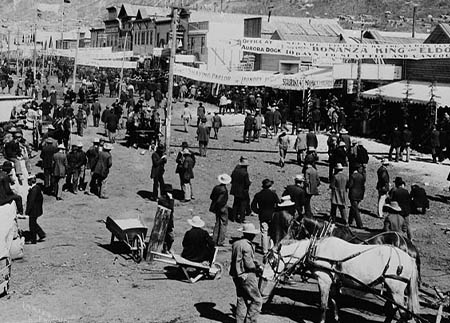
Front Street, Dawson City, Yukon Territory, Canada circa 1900 (Public Domain)
The Klondike
In 1897, Roland’s father began an adventure in Canada’s Klondike Gold Rush. As Roland was still in school, he was left behind in England with his mother and sisters until 1902 when he finished his education. Roland and the rest of the family sailed to Canada on the SS Parisian. In 1902, there was only one practical and “civilized” way for a gentry-class family like the Bourkes to reach Dawson City. Once they had arrived in Canada, they would have taken the train to Vancouver and then a steamship from either Vancouver or Victoria up the Inside Passage to Skagway, Alaska. From there, they would travel via The White Pass & Yukon Route (WP&YR) narrow-gauge railway from Skagway over the mountains to Whitehorse. A stern-wheel paddle steam vessel would take them from Whitehorse down the Yukon River to Dawson City. They joined his father in the goldfields of the Yukon, and Roland worked as a miner helping with the family’s gold claims for several years, apparently with little financial success.
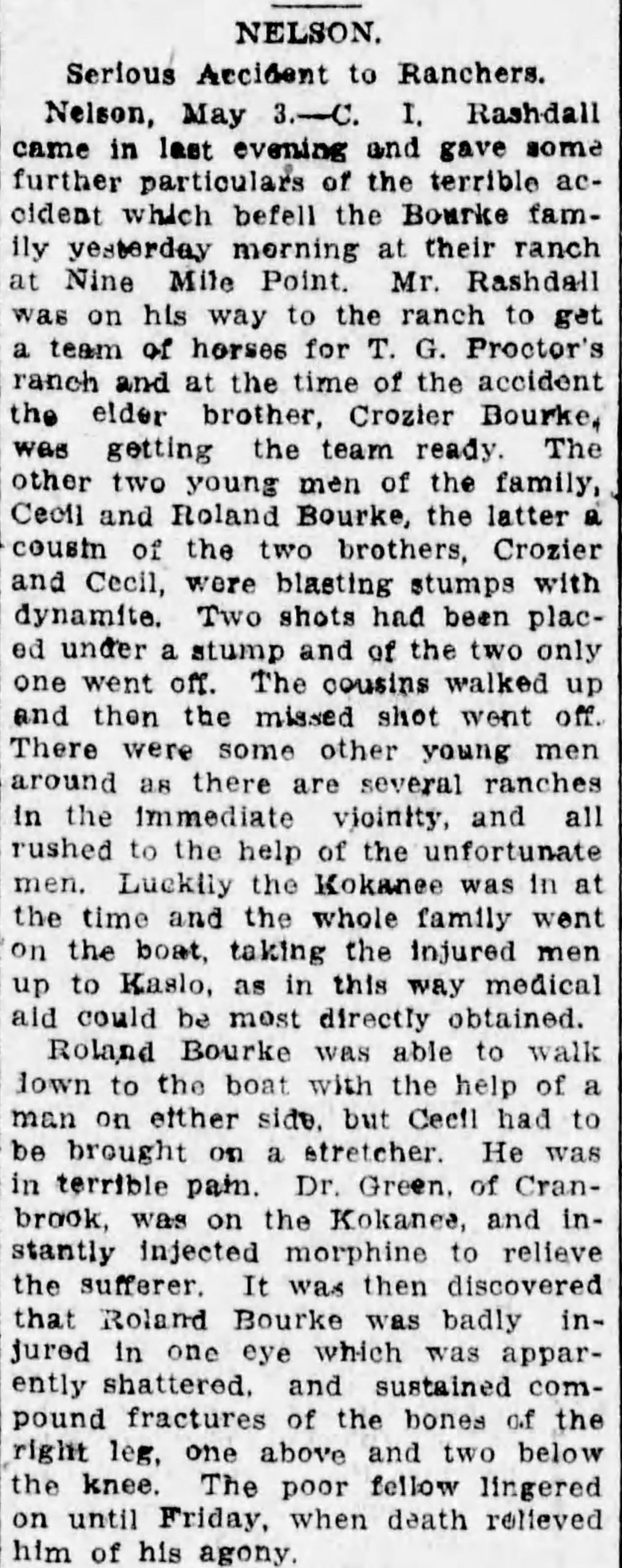
Daily News Advertiser, 7th of May 1907 (Newspapers.com)
Kootenay, British Columbia
By 1906, the gold rush was over, and Dr. Bourke’s health was deteriorating. In his mid-60s by then, he sought a quieter life and moved his family to a ranch the Kootenay region of British Columbia, to take up fruit farming. In 1907, a tragic accident occurred on the farm while the boys were clearing tree stumps with dynamite. A delayed blast severely wounded both Roland and his cousin Cecil, who later died of his injuries. The explosion left Roland with permanent eye damage and extremely poor vision, a condition that required him to wear thick glasses. This was a critical event in Roland’s life as it would result in him being rejected by several branches of the military later. This accident may have also mpacted Dr. Bourke negatively either physically or psychologically, as he is reported to have moved to Vancouver for his health around this time. His wife, Roland’s mother, initially stayed in Nelson to help with the family farm but moved to Vancouver after her husband took a bad turn in 1909 shortly before his death.
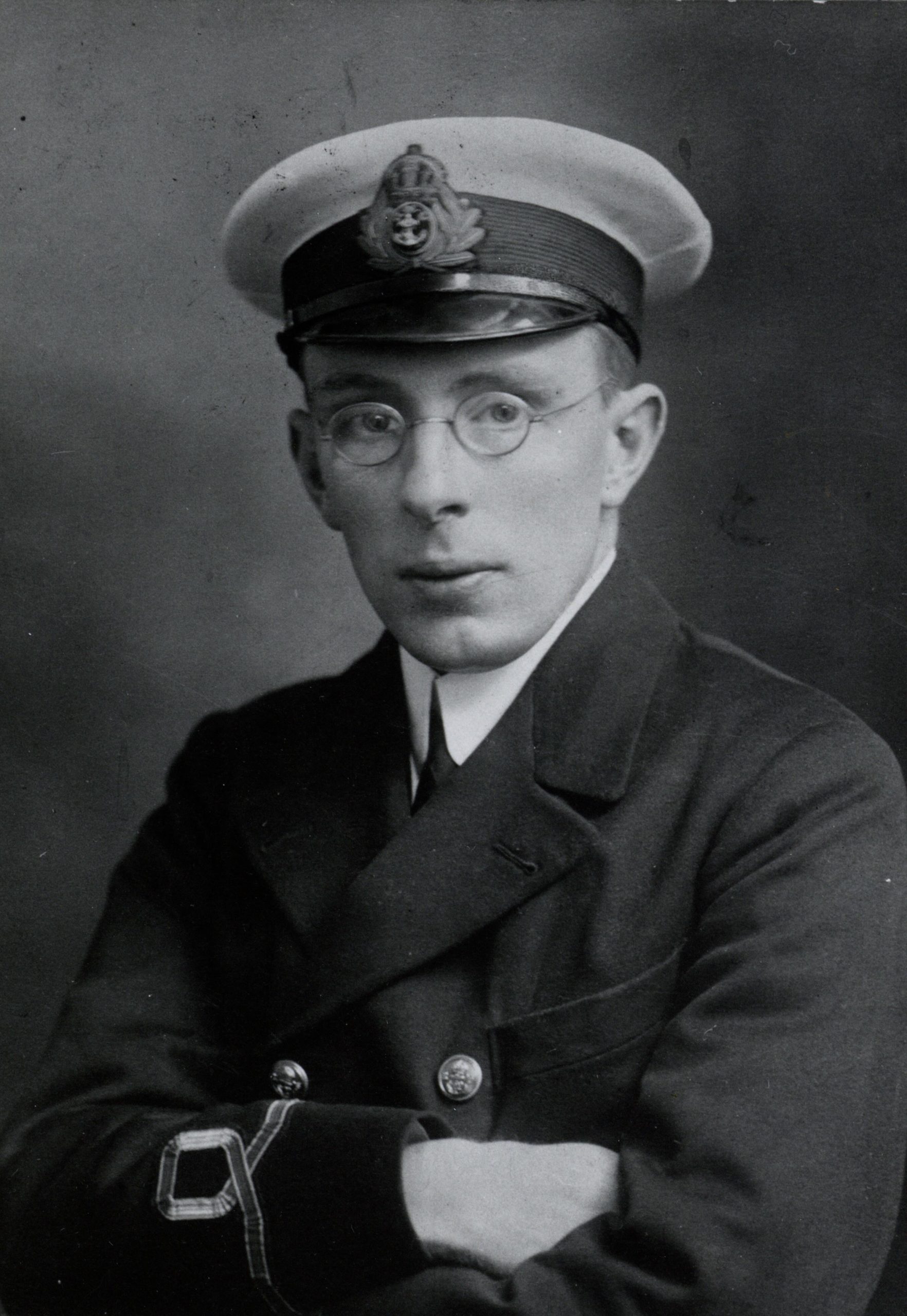
Portrait of Roland Bourke in his navy uniform circa 1915-1918 (Bourke Collection, CFB Esquimalt Naval & Military Museum, VR2026.005)
First World War
Some biographies of Roland state that while living in Nelson, he was associated with one of the local militia units in the area: the 102nd Regiment (Rocky Mountain Rangers) and/or the 107th East Kootenay Regiment. This would not be surprising considering his father’s service record. After the First World War broke out in 1914, Bourke attempted to transition from the militia to active service. However, Roland was rejected by all three branches of the Canadian armed forces due to his defective eyesight: army, airforce and navy. Intent on proving his fitness to serve, in 1915 Roland wrote in a letter to the Canadian government that he was willing to travel to California to obtain air pilot training and licensing to join the airforce. The response was that all airforce personnel had to have perfect eyesight and that he would therefore not be acceptable regardless. No documentation has been found so far to confirm whether he did actually go to California and take this training, but some biographies say that it happened. If he did obtain this certification, the training did not help him get into the Canadian armed forces. And in 1916, still determined to serve, he traveled to England at his own expense. He managed to accepted into the Royal Naval Volunteer Reserve (RNVR). Whether the reason for his acceptance was less rigorous medical requirements, his own persistence or his family connections, we do not know. He was commissioned as a Sub-Lieutenant in RNVR, and on 11 May 1916, Bourke was assigned to the Motor Boat “Violet.” Motor boats and motor launches were small, high-speed wooden vessels used for patrols and rescue. From there he moved on to captaining Motor Launches, initially based at Larne then later at Dover.
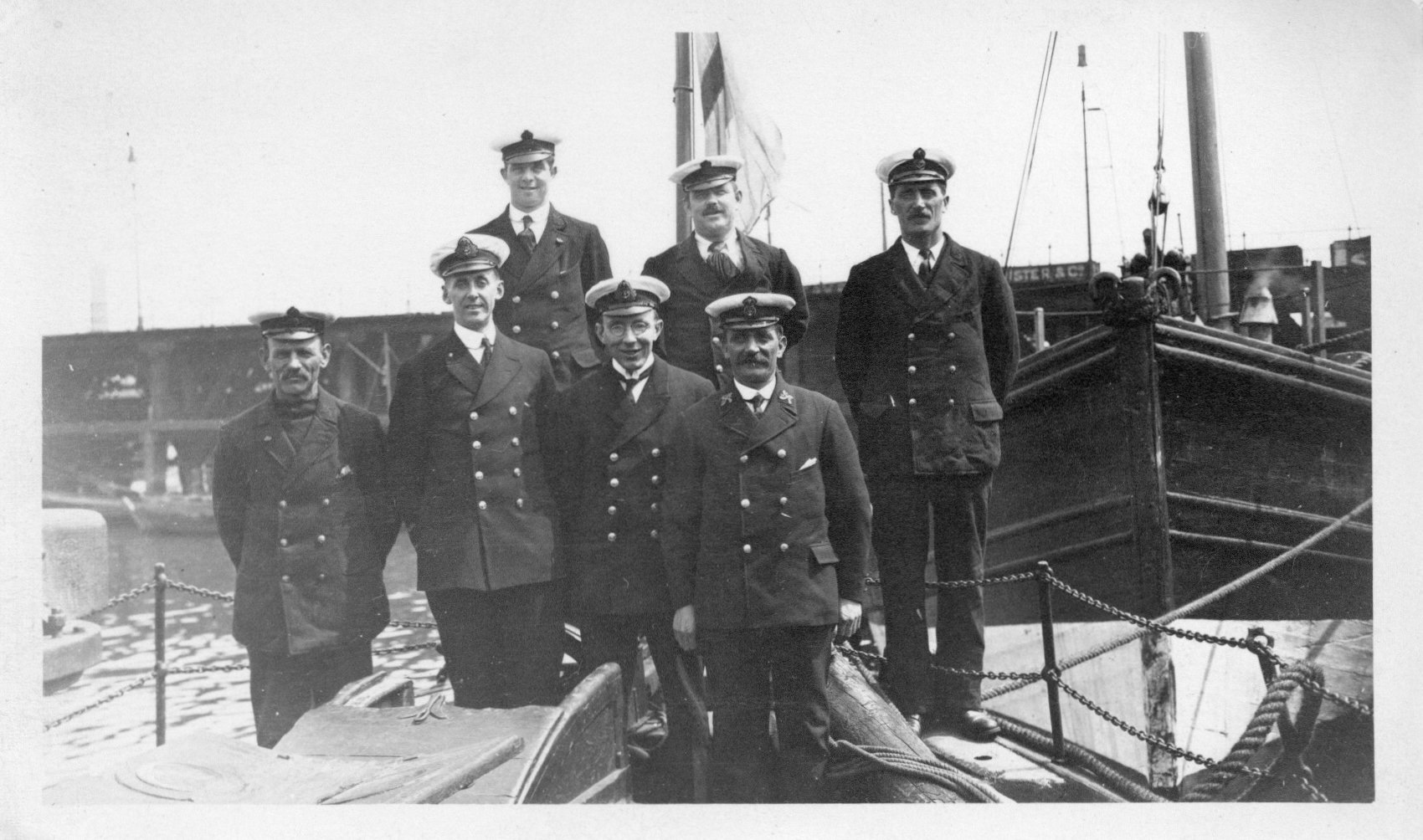
Bourke and other offices aboard a motor launch circa 1918 (Bourke Collection, CFB Esquimalt Naval & Military Museum, VR2026.005)
The Making of a Hero
On the night of April 22-23, 1918, Lieutenant Bourke participated in the daring raid to block the German-held ports of Zeebrugge and Ostend in Belgium. Commanding Motor Launch 276, he was tasked with rescuing the crews of the blockships. Despite heavy fire, he rescued 38 sailors from the sinking HMS Brilliant and towed a crippled motor launch (ML 532) out of the harbour. For his “coolness and skill,” he was awarded the Distinguished Service Order (DSO). Three weeks later, on the night of May 9-10, Bourke volunteered for a second blocking operation at Ostend. After the blockship HMS Vindictive had been grounded and its crew supposedly evacuated, Bourke took ML 276 back into the harbour to ensure no one was left behind. Hearing cries from the water, he located Lieutenant Sir John Alleyne and two ratings clinging to an upturned boat. Under intense fire from German shore batteries at a range of only a few hundred yards, Bourke maneuvered his launch to rescue them. During the action, ML 276 was hit 55 times; a 6-inch shell killed two of his crew and nearly destroyed the vessel. Nevertheless, Bourke managed to bring the survivors and his battered ship to safety. For these acts of valour, he was awarded the Victoria Cross, Distinguished Service Order, French Legion of Honour (Chevalier) and the Croix de Guerre.
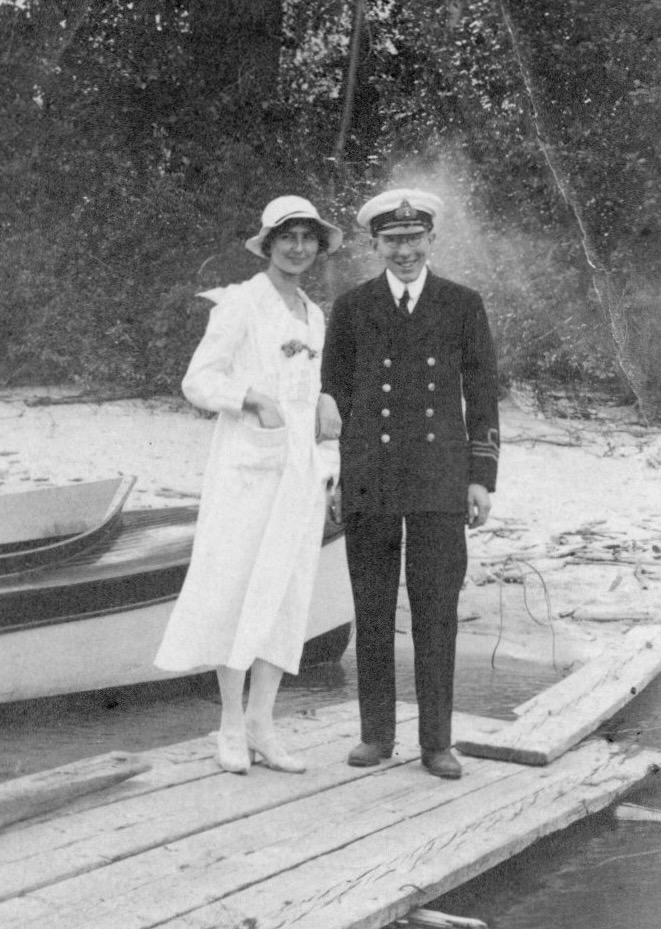
Bourke and his wife in the Kootenays circa 1919 ( Bourke Collection, CFB Esquimalt Naval & Military Museum, VR2026.005)
Marriage & Lecture Tour
On September 24, 1919, Roland married Rosalind Thelma Barnet in Vancouver, British Columbia. Rosalind was born in Australia but her family had come to Canada around 1906 following relatives who had started a business in Vancouver. Rosalind’s family settled in the Kootenays. She and Roland either met prior to him leaving for England in 1916 or when he returned to Canada on leave during the war. After they married, the couple left for a tour of Australia and New Zealand, where both had relatives. Roland embarked on a lecture tour with the assistance of the Navy League, speaking about his experiences during the war. Biographies mention that he and his wife had considered moving to New Zealand or Australia. However, the couple returned to Nelson, where Roland resumed farming. He became a fruit and vegetable grower, notably developing a specialized technique for double-cropping potatoes. He also served as a local official for navigation lights on Kootenay Lake.
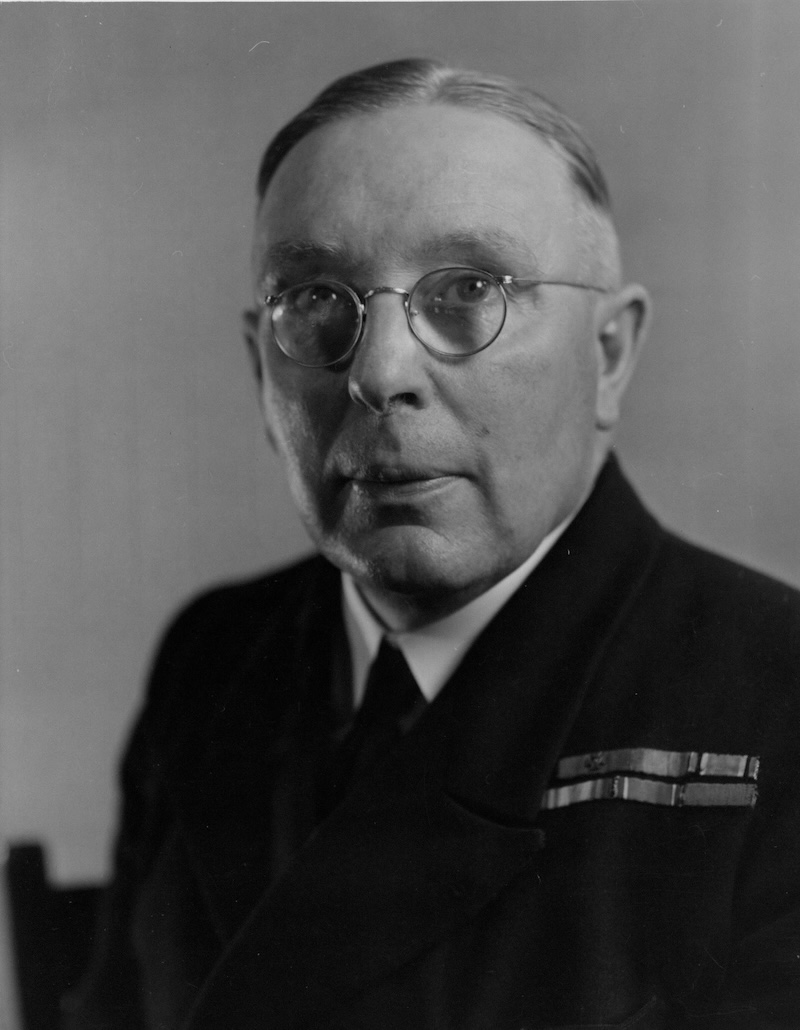
Bourke in the Royal Canadian Navy in the 1930s or 1940s (Bourke Collection, CFB Esquimalt Naval & Military Museum, VR2026.005)
Esquimalt & The Second World War
By 1932, Roland and his wife, who had not had children, left the farm. The couple moved to Greater Victoria where Roland began working at the Canadian Forces Base Esquimalt as a civil servant in an administration capacity. In July 1937, Roland came up with the idea of using civilian fishing boats for coastal patrolling and put forth the idea of the “Fishermen’s Reserve” (often called the “Gumboot Navy”). Recognizing that the vast, rugged coastline of British Columbia was vulnerable, he was called to Ottawa to discuss his ideas for organizing local fishermen into a volunteer naval force. Back in British Columbia, he travelled up the coast recruiting for the Fisherman’s Reserve. Using his status as a VC hero, he encouraged seasoned west coast mariners to join the reserve and returned with 70 applications. These men operated their own fishing vessels, which were eventually outfitted with basic armaments and radio equipment to conduct patrols and look for enemy activity. In April 1939, Bourke was promoted to Principal Clerk at CFB Esquimalt with the responsibilities of drafting and classing all reserves as well as planning improved training. In September 1939 he signed up for active service, and in May 1940 he was called to the Royal Canadian Naval Volunteer Reserve (RCNVR). Though his damaged eyesight prevented him from a front-line sea command, he reached the rank of Acting Commander and held several critical shore appointments. He added two medals to his collection: Canadian Volunteer Services Medal and War Medal 1939-1945.
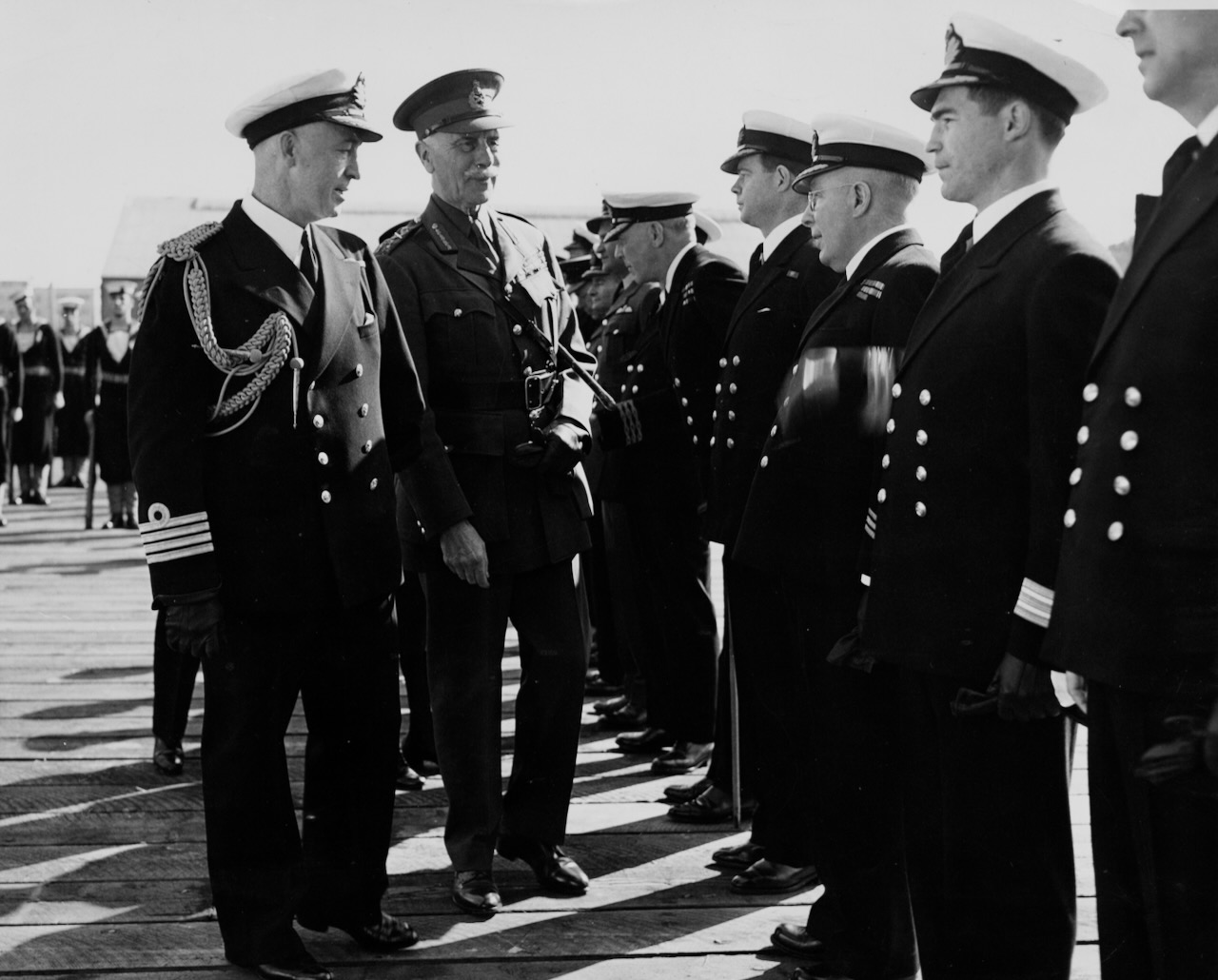
Bourke at the Victoria Cross Centennial Celebration in England 1956 (Bourke Collection, CFB Esquimalt Naval & Military Museum, VR2026.005)
Retirement & Legacy
After the cessation of hostilities in 1945, Bourke returned to the civil service at CFB Esquimalt, where he worked until his retirement in 1950 at the age of 65. Roland and his wife continued to live in Esquimalt until his death on August 29, 1958, at the age of 72. He was buried with full naval honours at Royal Oak Burial Park in Victoria, British Columbia.
His Victoria Cross and other decorations were willed to the National Archives (now Library and Archives Canada) in Ottawa. His legacy is honoured in British Columbia by the naming of Mount Bourke and Bourke Rock. CFB Esquimalt Naval & Military Museum has a memorial to him in the Delamere Room.
References & Sources
For further reading or information about the sources for content on this page, visit these sites.
A significant portion of the content used in this biography and throughout this website and project come from the archives of the Canadian Forces Base Esquimalt Naval & Military Museum.
Bourke’s heroism has been documented on many websites including, but not limited to the following.
Much of the research for this site including this biography uses commercial databases such as Ancestry, FindMyPast, Family Search and Newspapers.com, as well as public domain books found on Archive.org and Google Books.