
The Bourke Family Legacy
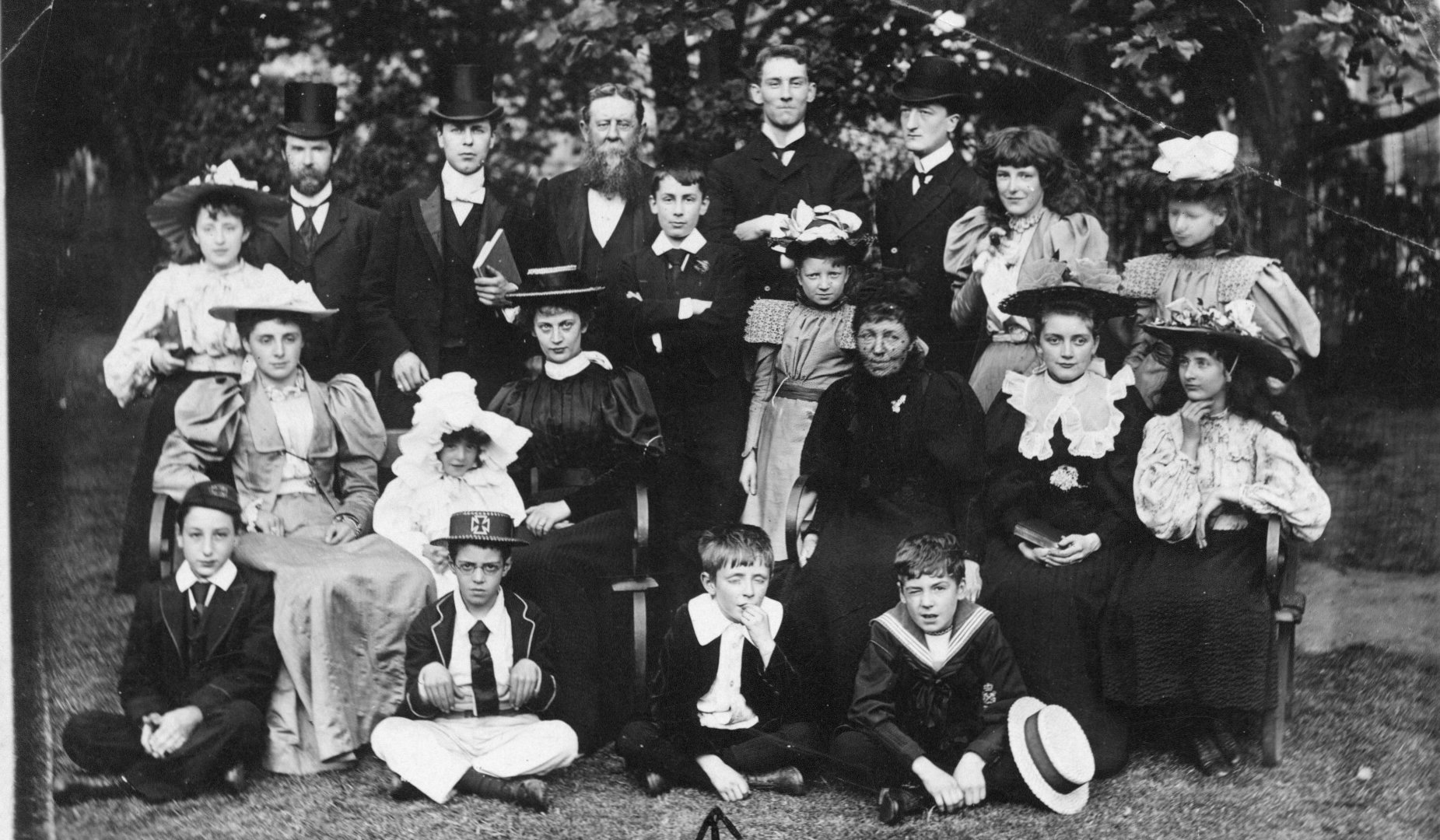
Portrait of the Bourke Family taken during the 1890s; Roland is marked with an arrow seated in the bottom row; the three young men standing centre back are believed to be Roland’s half brothers, but the rest of the family members have not been identified. (Bourke Collection, CFB Esquimalt Naval & Military Museum, VR2026.005)
Roland Bourke came from the landed gentry of Ireland. His ancestry goes back to William de Burgh, the elder brother of Hubert de Burgh, Earl of Kent, who was Regent of England. William’s descendants included the Lords of Connaught (or Connacht), the Earls of Ulster and Clanricarde, as well as wives of kings, dukes and princes.
In the 14th century, the powerful de Burgh family in Ireland (later surnamed Burke and Bourke) distinguished themselves and Gaelicized their names by adopting the title Mac William to identify themselves as Son of William de Burgh.
For centuries, the head of the Bourke family in County Mayo, Ireland was officially known by the title “The Mac William.” When the English eventually forced the Irish lords to surrender their Gaelic titles and take English peerages, the Mac William Íochtar became the Earl of Mayo.
Bourke men often substituted “McWilliam” for the middle name they were given at birth to identify with their heritage. In various Irish landed gentry records, this specific branch is identified as being of the “Mac William” line. This line holds a title of honour from the Crown (Duke, Marquess, Earl, Viscount, Baron).
While Roland’s family was related to the Earls of Mayo (the head of the Bourke/Mayo line), they did not hold that title themselves. Isidore was a younger son and did not inherit any titles or land. However, because Dr. Bourke maintained the landed gentry credentials as well as those of a retired high-ranking military officer, the family had money and privilege, and his sons would have been raised with the expectations of “gentlemen.” In London, the family lived in a posh neighbourhood and had five servants in the household, including a governess for the children.
According to newspaper articles published at the time, while living in Dawson City Dr. Bourke appears to have had a certain amount of authority because of his background. This would have been in addition to any authority given to him because of his position as a medical doctor. Even when roughing it in the Yukon, And on a fruit ranch in British Columbia, the Bourkes would likely have followed British social distinctions. These distinctions may have played a role in Roland’s eventual acceptance into the British armed forces, compensating for his vision disability.
Isidore McWilliam Bourke, 1842-1909
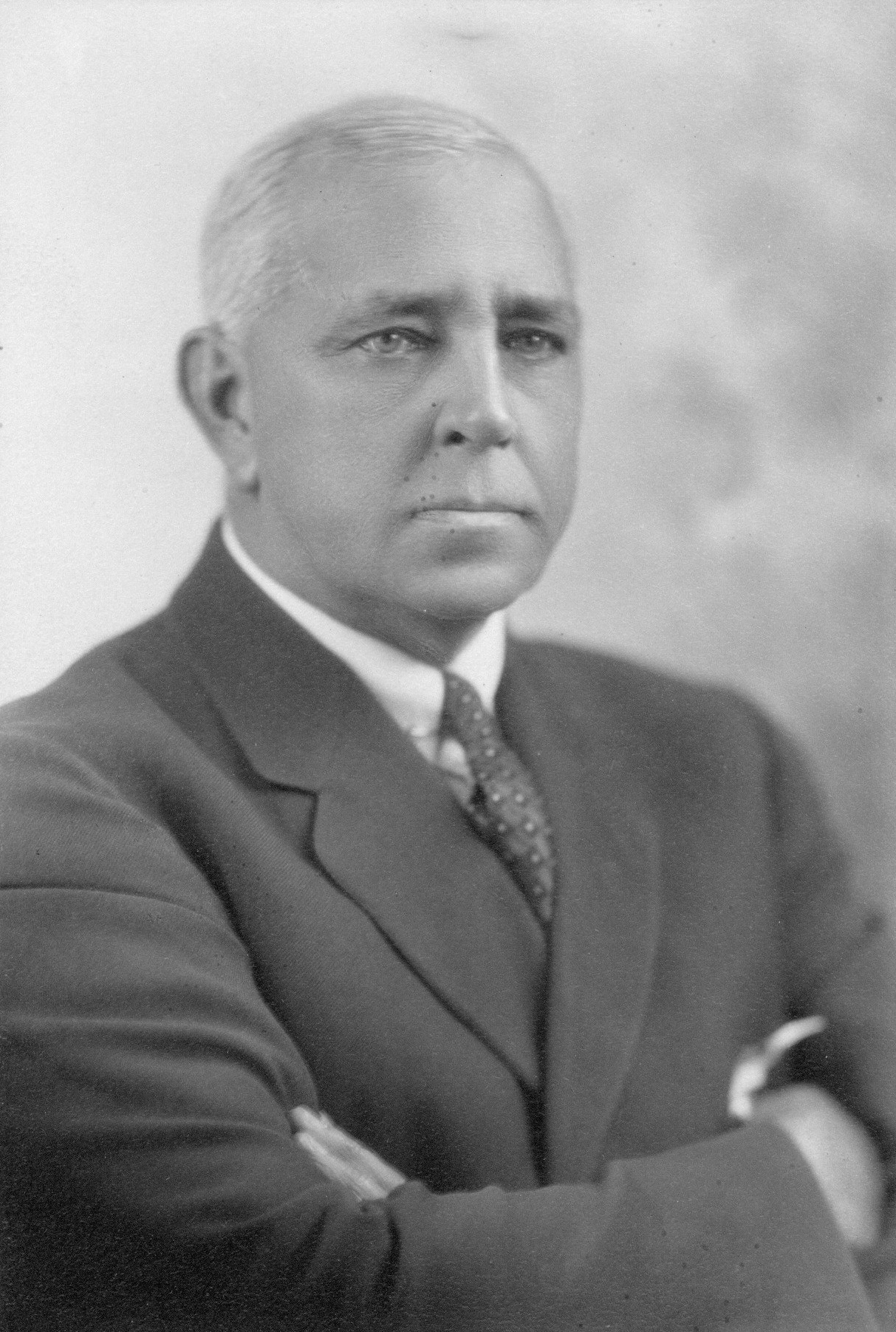
Portrait of Dr. Isidore McWilliam Bourke taken in Vancouver, probably around 1908 (Bourke Collection, CFB Esquimalt Naval & Military Museum, VR2026.005)
Isidore Bourke was born in 1842 into the landed gentry family of the Burke’s of Curraleegh in Ireland. He may have been born on the Curraleegh estate in Country Mayo, but he was baptised (as Isodore Burke) on November 15, 1842 at St. Mary’s Pro Cathedral located on Marlborough Street in Dublin City in Ireland. This was a Roman Catholic Cathedral, although due to the anti-Catholic political climate at the time, it was referred to as the Metropolitan Chapel.
The younger son of the Earl of Curraleegh, Isidore is reported to have attended Trinity College and Queen’s University, receiving a medical degree in 1864. Shortly after graduating, he entered the Army Medical Department. Based on his medals, he appears to have served in both Afghanistan and India between 1865 and 1880. Isidore married Charlotte Holland in Edinburgh in 1872. She gave birth to three sons in Calcutta between 1873 and 1877, when she died of cholera.
Isidore returned to England in 1880 with the rank of Surgeon Major and began a medical practice in South Kensington, London, where he married Marianna Carozzi. Marianna gave birth to three daughters and a son between 1881 and 1891.
Then in 1897, Isidore set out on an adventure in Canada. Despite being a middle-aged, successful doctor, he had become captivated by the Klondike Gold Rush. Dr. Bourke left his London practice and moved to the Yukon Territory. In addition to working mining claims, Dr. Bourke also began operating the Metropole Hotel and later a hospital in Dawson City. He became a prominent citizen and, according to newspaper articles, acted as prosecutor for the Crown in court cases. Between 1898 and 1902 his sons, daughters and wife joined him.
By 1906, with failing health and the gold running out, Isidore moved his family to Nelson, British Columbia where he purchased a fruit farm. But in 1907 after several family tragedies and declining health, Isidore moved to Vancouver, leaving the rest of the family behind in the Kootenays. He started practicing medicine again, but his health continued to deteriorate. In 1909, after a bad spell, Isidore’s wife had joined him in Vancouver. He died shortly afterward.
Henry Walter Laurie Bourke, 1873-1907
Henry Walter Laurie Bourke was the eldest son of Dr. Isidore McWilliam Bourke and his first wife, Charlotte Frances Holland. Henry was born in Dacca, Bengal, India (present-day Dhaka, Bangladesh) in 1875 where his father was serving with the British army as a Surgeon-Major. After the death of Henry’s mother to cholera, the family returned to England where his father set up a medical practice.
Henry was admitted as a student to the Institution of Civil Engineers in October 1894 when he was 21 years old. By 1898, he was a representative of the Miner’s Federation of Great Britain. He joined the Royal Department of Mines in the country of Siam (present day Thailand) in 1901. Henry visited his family in Canada during 1905 and 1906. On his way back to Siam, he married Casandra Olena Morrison in Victoria, British Columbia, and returned to Siam with her.
Though at least one online article erroneously labeled Henry a military or police officer who was murdered, newspapers reported that Henry died of cholera in 1907 at the age of 33.
The Straits Times dated 12 February 1907 wrote, “Mr. W. Walter Bourke (sic), Deputy Director of the Royal Department of of Mines, Siam, died at Bangkok on the 3rd inst…” This was confirmed by the Eastern Daily Mail and Straits Morning Advertiser on 18 February 1907. “Mr. H. Walter Bourke, Deputy Director of the Royal Department of Mines in Siam, succumbed to a choleraic attach on the 3rd inst: The late Mr. Bourke joined the Mining Department in Siam in 1901, and for the greater period of his service was in charge of the office at Puket. He went on leave towards the end of 1905, and returned in May last when he took over the acting Directorship of the Department… Before coming to Siam, Mr. Bourke, who was an A.R.S.M. and M.I.M.M., had been for some time in British Columbia… The utmost sympathy is felt for Mrs. Bourke. They were married only ten months ago in Canada, when Mr. Bourke was on his way back from leave.”
Henry died of cholera almost exactly 20 years after his mother died of the same illness.
Isidore McWilliam Bourke (Jr.), 1874-1943
Roland’s half-brother Isidore was born in 1874 in Barrackpore, Bengal, India. He was the second son of Surgeon-Major Dr. Isidore Bourke and his first wife Charlotte Holland. After his mother’s death from cholera, the family moved to England. Isidore grew up in London and became a doctor like his father. Also, like his father, it appears he joined the army as an Isidore Bourke served in the medical corp during the Boer War in South Africa, which was from 1899 to 1902 (when his father was known to be in The Klondike).
Isidore Jr. was shown in a directory to be a Licentiate of the Royal College of Physicians by 1901, and in 1907 he received a Diploma in Public Health.
According to a newspaper article about his brother Henry’s death, young Isidore was practicing medicine in Singapore in February 1907. That same year, Isidore visited his family in Canada, arriving in Vancouver in April of that year from Great Britain. He was travelling with his late brother Henry’s widow Cassie, so Isidore may have been escorting her back to Canada from Siam/Thailand.
On the 7th of September 1911, Isidore Jr. registered with the Queensland Medical Board in Australia and was working at the Brisbane Hospital in 1912. He enlisted in the Australian army on the 8th of April 1915 and departed Sydney on 22 May 1915. In October 1916, he held the rank of Captain in the Australian Army Medical Corps.
In 1925, Isidore appears as a surgeon in a city directory for Queensland Australia living at Lowth’s Hotel in Townsville. That same year, the Queensland Police Gazette reported that a Stephen Russel Lowth (same name as the hotel) had been arrested for “attempting unlawfully to kill Isidore McWilliam Bourke, at Townsville, on the 31st January, 1925, and stands committed for trial at the Supreme Court, Townsville, on the 16ht February, 1925. At about 7:30 p.m. on the 31st ultimo the accused discharged two shots at Dr. Bourke in Louth’s(sic) hotel, Townsville, one of which took effect in the doctor’s thigh.” The charge was later reduced to “unlawfully wounding with intent to do grievous bodily harm.” On 25th February 1925, Lowth was “found not guilty on the grounds of insanity at the time, caused by excessive drink, and ordered to be kept in strict custody in Stewart’s Creek Gaol until His Majesty’s pleasure is known.”
During the 1930s, he spent time in both England and Australia. There are a couple of potential marriage records that could apply to Isidore, but these have not been confirmed, so it is not known if he ever married or had children. He died on the 2nd of February 1943 in Maidstone, Kent, England.
John Joseph Fitzadler Bourke, 1877-1953
John Joseph Bourke was born on the 25th of May 1877 in Barrackpove, India where his father was a Surgeon-Major with the British Army. As noted earlier, the family moved to England after John’s mother died of cholera. He grew up in the family home in the St. Luke neighbourhood of South Kensington in London.
In 1897, his adventurer father left for the Klondike Gold Rush, and in 1898 John, who was 21 years old, followed. John helped his father with the mining operations and with running the hotel that his father owned in Dawson City. In the early 1900s, the Bourke Family dispersed. John’s brother Henry went to Siam/Thailand as a mining engineer. His brother Isidore went into the British Army medical corp and served as a doctor in the Boer War. But John stayed in Dawson City with his father, and he was there when his step-mother and step-siblings, including Roland, arrived in 1902.
In Polks Gazetteer 1903 directory, John was shown as a mining broker, who was a private middleman who facilitated the business side of the gold industry. Many original “stampeders” who had staked claims in 1898 were exhausted or broke by 1903. Brokers acted as agents for these mining claims, finding buyers for miners or consolidating several small, adjacent claims into one large block to sell to a corporation. By 1903, gold production in the Klondike actually reached its all-time peak ($14.5 million that year), but the nature of the work had changed. The era of the lone miner with a pan was largely over, replaced by the era of the Gold Dredge.
By 1906, Dawson City was on the decline. The city was a fraction of its former size as many miners had moved on, some of them to Alaska where gold had been found in 1899. John was one of the miners who moved to Alaska, arriving in October 1906. This was about the same time that his father, step-mother and step-siblings moved to Nelson. The hotel they’d owned would have been sold or shut down. John could have gone to the Kootenays with the family but appears to have still had gold fever and decided to stay in the north, where he’d lived for about eight years by then.
In the 1910 U.S. census, he was living at Forty Mile, Division 2, Alaska Territory. He was 32 years old and single. In 1917, John registered for the draft, but there are no records to indicate if he served in any capacity. He was in his late 30s by then so might have been exempt due to his age. His residence was shown as Eagle, Fourth Judicial District, Alaska.
On John’s naturalization application for U.S. citizenship in 1918, he shows his occupation as miner, and a later probate document for a family member indicates that he had been working as a miner continuously since he arrived in North America. Both the 1920 and 1930 U.S. federal censuses show that John was still mining in Eagle, Alaska. When his brother, Isidore, wrote his will in 1943, he indicated that John was still working a gold mine in Eagle, Alaska, and Isidore made provision for him. By the time John died in 1953, however, he was back in Dawson City, Yukon.
References & Sources
For further reading or information about the sources for content on this page, visit these sites.
A significant portion of the content used in this biography and throughout this website and project come from the archives of the Canadian Forces Base Esquimalt Naval & Military Museum.
Bourke’s heroism has been documented on many websites including, but not limited to the following.
Much of the research for this site including this page uses commercial databases such as Ancestry, FindMyPast, Family Search and Newspapers.com, as well as public domain books found on Archive.org and Google Books.