
Rear Admiral Patrick Willet Brock, DSO, CB
Detailed Biography
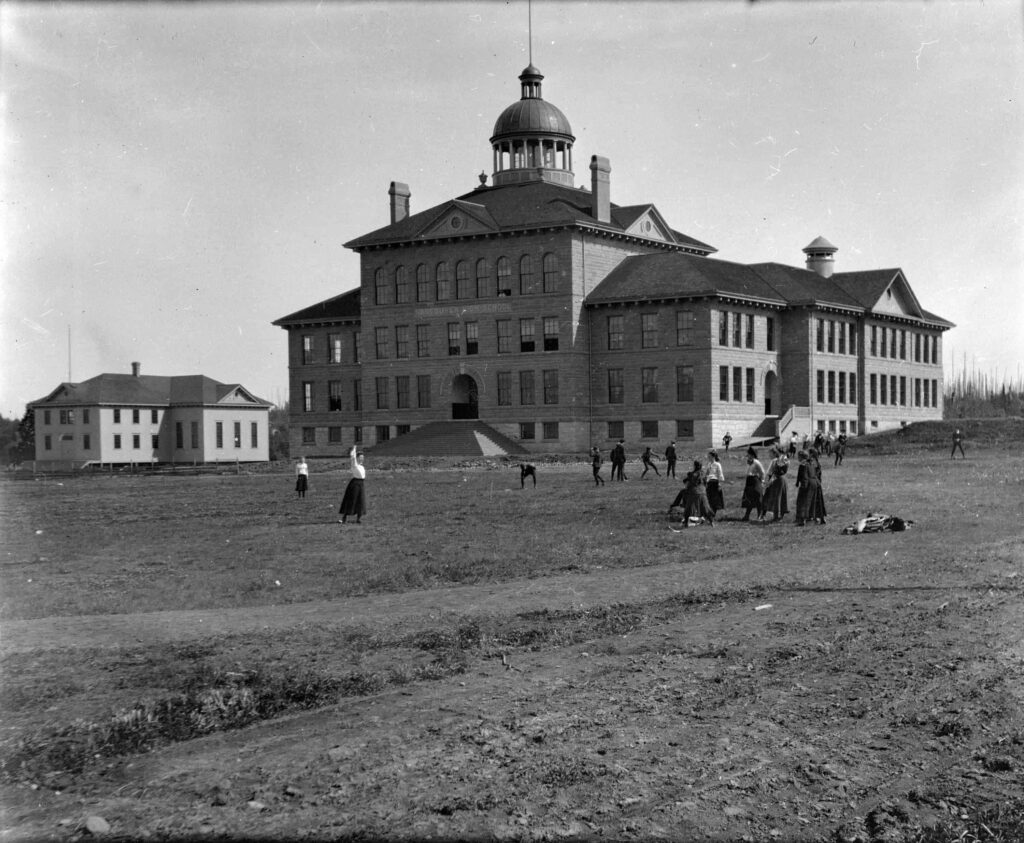
King Edward School in Vancouver, British Columbia as it looked around 1912 when PWB attended (Public Domain)
Early Years
Patrick Willet Brock (Canada Brock or PWB) was born 30 December 1902 in Kingston Ontario into a prominent Canadian family. His father, Reginald Walter (R.W.) Brock, was a noted geologist who spent his life as a government and industry office holder, academic professor, army officer, and university administrator. Brock’s mother, Mildred Britton, was the daughter of a Kingston Liberal Member of Parliament and future judge, Byron Moffatt Britton, and she was the granddaughter of politician Luther Hamilton Holton. The family moved to Vancouver in 1911 when PWB’s father, RWB, took on a professorship at the newly founded University of British Columbia. When war broke out in 1914, RWB joined the Canadian Expeditionary Forces and quickly rose from Captain to Major.
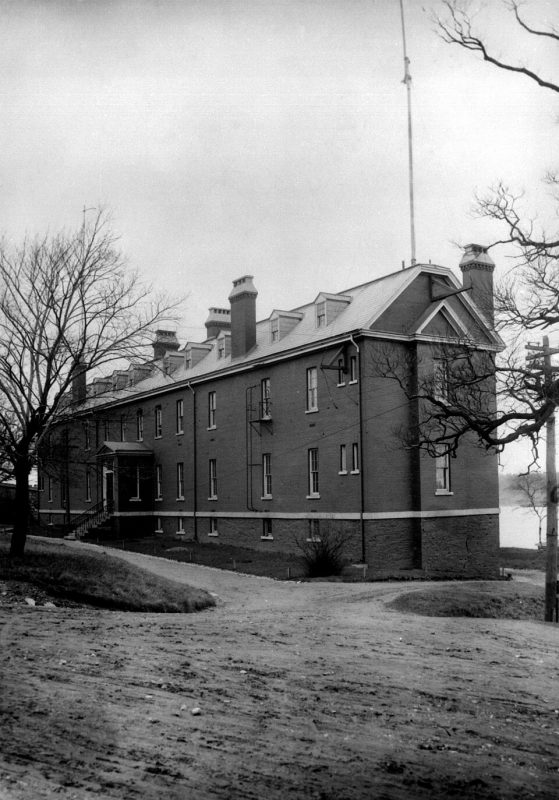
Royal Naval College as it looked circa 1913, Halifax, Nova Scotia, Canada (Public Domain)
Naval College
While the First World War was raging in Europe, a 14-year-old PWB began attending the Royal Naval College in Halifax as a cadet. He travelled across North American by train arriving at the college in September and was on the harbour during the Halifax Explosion that December. The college’s building was destroyed, and PWB, along with the other cadets, were lucky to be alive. After the Christmas break, the college moved to Kingston Ontario where it was given emergency space at the Royal Military College. Then at the beginning of the next term, it moved to Esquimalt, where it was given what was thought to be a permanent home. While PWB finished his navy training in Esquimalt, his father returned from serving overseas and became Dean of Applied Sciences at UBC in 1919. PWB graduated from the naval college in 1920 top of his class.
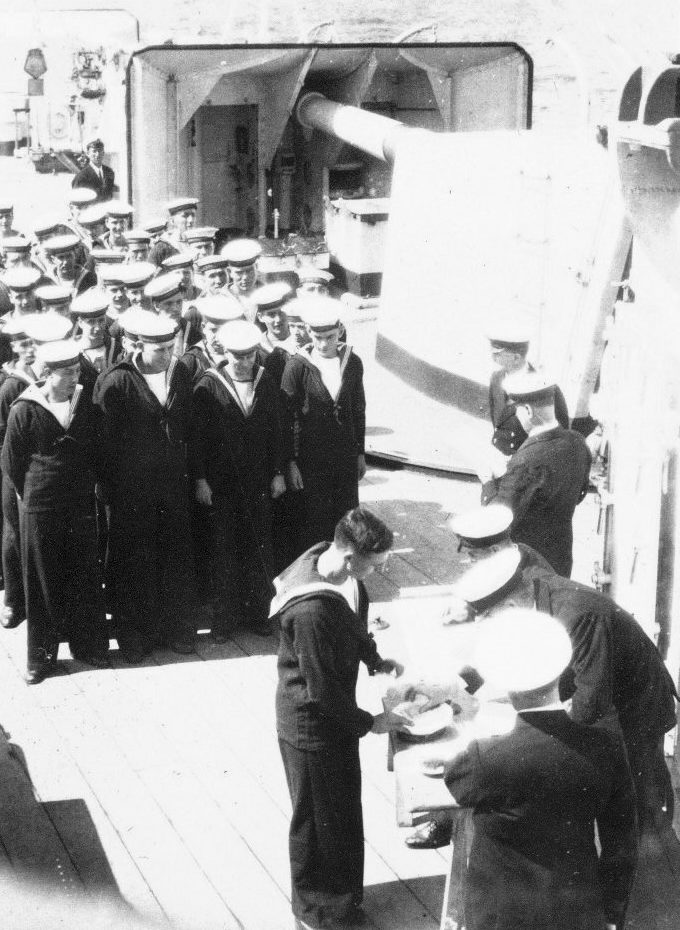
Payday onboard ship (PW Bock Collection, CFB Esquimalt Naval & Military Museum)
Royal Canadian Navy to Royal Navy
PWB moved into the Royal Canadian Navy as a Midshipman. Due to a lack of ships in Canada at the time, he was assigned to a Royal Navy ship in the Mediterranean Sea stationed in Malta. Records indicate this ship was HMS Orion. He moved from there to HMS Emperor of India the following year, still in the Mediterranean. With the downsizing of the Royal Canadian Navy in 1921, Brock was forced to transfer to the Royal Navy to continue his naval career and was promoted to sub-lieutenant. In 1922 he served on HMS Ajax as part of the Mediterranean Fleet. In 1923, PWB attended the Royal Naval College in Greenwich, England for more training, and then returned to Canada on leave. By this time, the Brock family had moved into a waterfront home designed by famed architect Samuel Maclure, and the Brocks were among Vancouver’s leading citizens. The house, located at 3875 Point Grey Road, is now called The Brock House and is operated as an event venue and heritage building. In 1924 PWB was back in the Mediterranean serving as Sub-Lieutenant on HMS Cardiff.
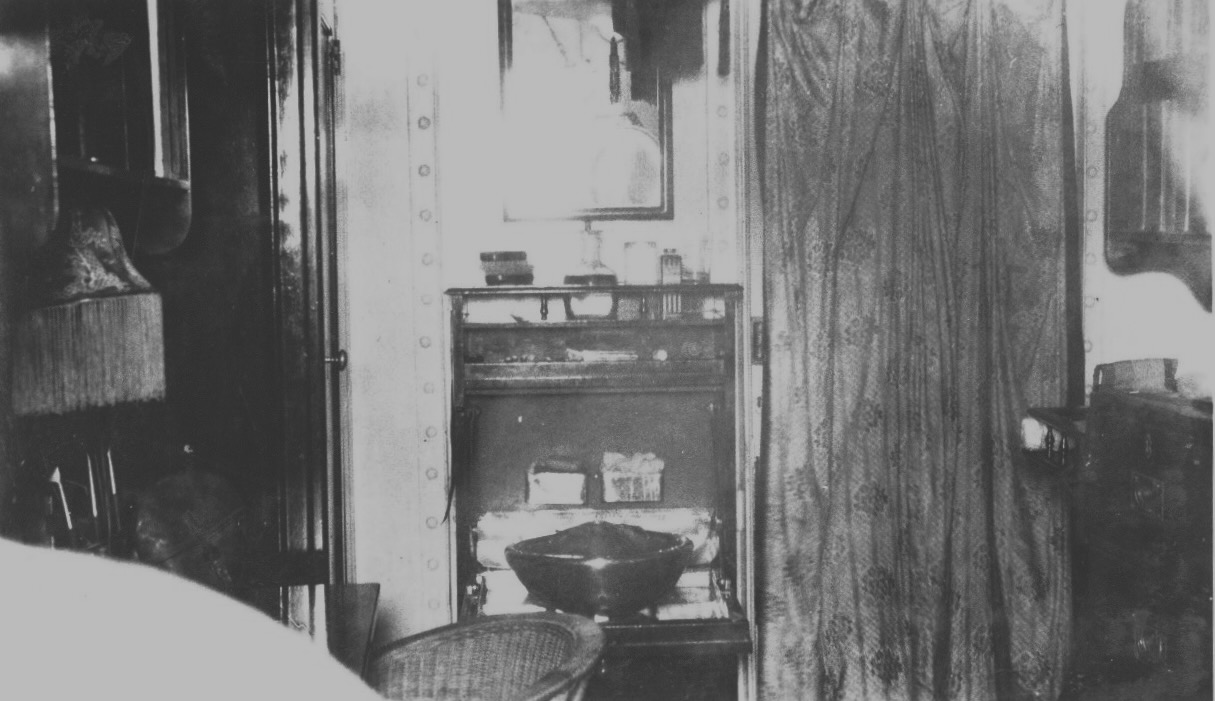
Brock’s cabin on the Vindictive 1928 (PW Bock Collection, CFB Esquimalt Naval & Military Museum)
HMS Vindictive in China
By 1925, he had been promoted to Lieutenant and applied for a transfer to China, returning to Canada to await his assignment. Heightened activity on the Royal Navy’s China Station at the time was in response to the breakdown of the treaty-port system under surging Chinese nationalism. To protect British trade, citizens and vast commercial holdings in China, Great Britain carried out “Gunboat Diplomacy” — the implicit or explicit threat of naval force to ensure political compliance and protect economic privileges. PWB received his orders while he was visiting his family in Canada for Christmas, and travelled from Vancouver on the Canadian Pacific Steamship, Empress of Australia. He was just 23-years-old when he arrived in Shanghai and joined HMS Vindictive, where he spent the next three years amidst the turmoil of the start of the Chinese Revolution.
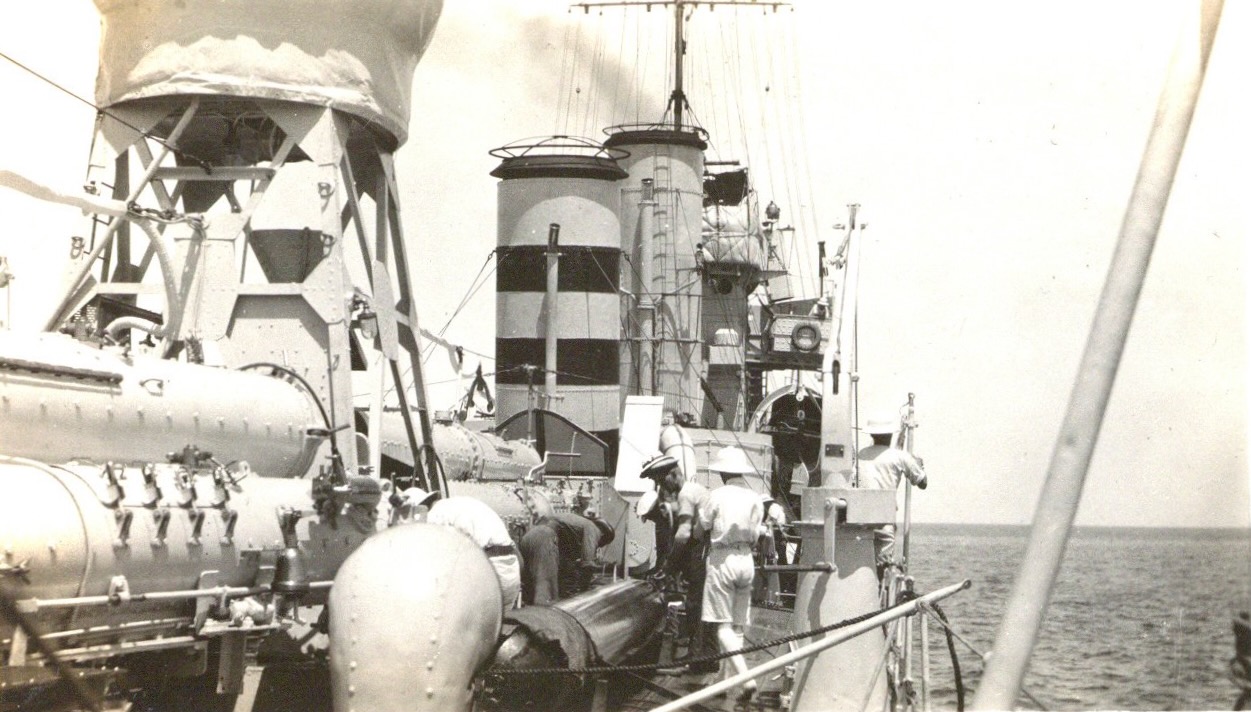
Overhauling a Torpedo (PW Bock Collection, CFB Esquimalt Naval & Military Museum)
England & Torpedos
He returned to the Royal Naval College in Greenwich England for more training in 1930, and in 1931 he was assigned to the HMS Vernon shore station in Portsmouth England where he specialized in torpedos. During this time England, PWB met Muriel Doreen Collinson, known as Doreen. Doreen’s father was Tathwell Henry Bate Collinson, a British engineer who specialized in submarine telegraphy during the expansion of the British Empire’s global communications network. Her father died in 1909, and Doreen and her mother appeared to have travelled extensively after his death. Doreen and PWB had met in China in the late 1920s, however, he did not recall this first meeting when they met again in England (but she did). When PWB was appointed as Torpedo Officer on HMS McKay in the Mediterranean, he and Doreen decided to get married so that she could accompany him. They married in December 1931.
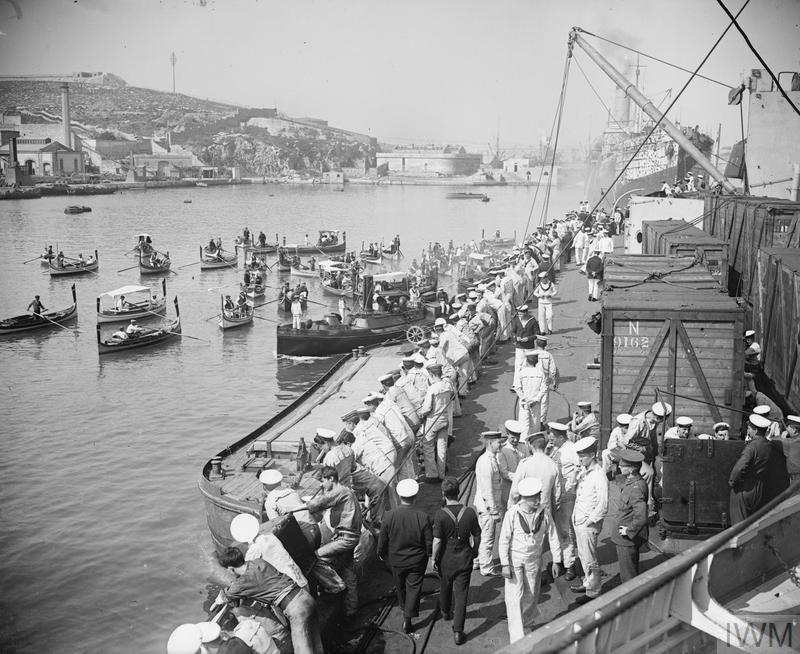
Malta Harbour in the Interwar period (Imperial War Museum, Image: Q 13998; Non-commercial Use License)
Interwar Mediterranean
In January 1932, PWB was on the McKay. While PWB’s lived onboard, the couple had a house in Malta where he stayed as much as was possible. Doreen became part of the navy wives’ social circle and PWB was promoted to Lieutenant-Commander. PWB spent most of 1932 and 1933 on HMS McKay and HMS Duncan. In 1934 he was back at HMS Vernon and also travelled to Canada where he visited relatives and friends in Ontario. Tragedy struck PWB’s family in July 1935 when his parents were killed in a small plane crash in British Columbia. Hundreds attended the funeral procession for the prominent Vancouver couple, but PWB was in the Mediterranean at the time, but he returned to Canada as soon as he was able to get leave. In letters and diary entries written during that time, he recounts significant incidents and accidents at sea, as well as historical events including the Hindenburg flying over his ship at Gibraltar in 1936. He was part of the flotilla in the Persian Gulf Incident in 1933, in response to a Persian gunboat that “hauled down” the British flag in a village. He wrote, “We are here to show the sheiks that the old lion still has a few teeth.” He spent most of 1936 and 1937 serving on HMS Orion in the Home Fleet.
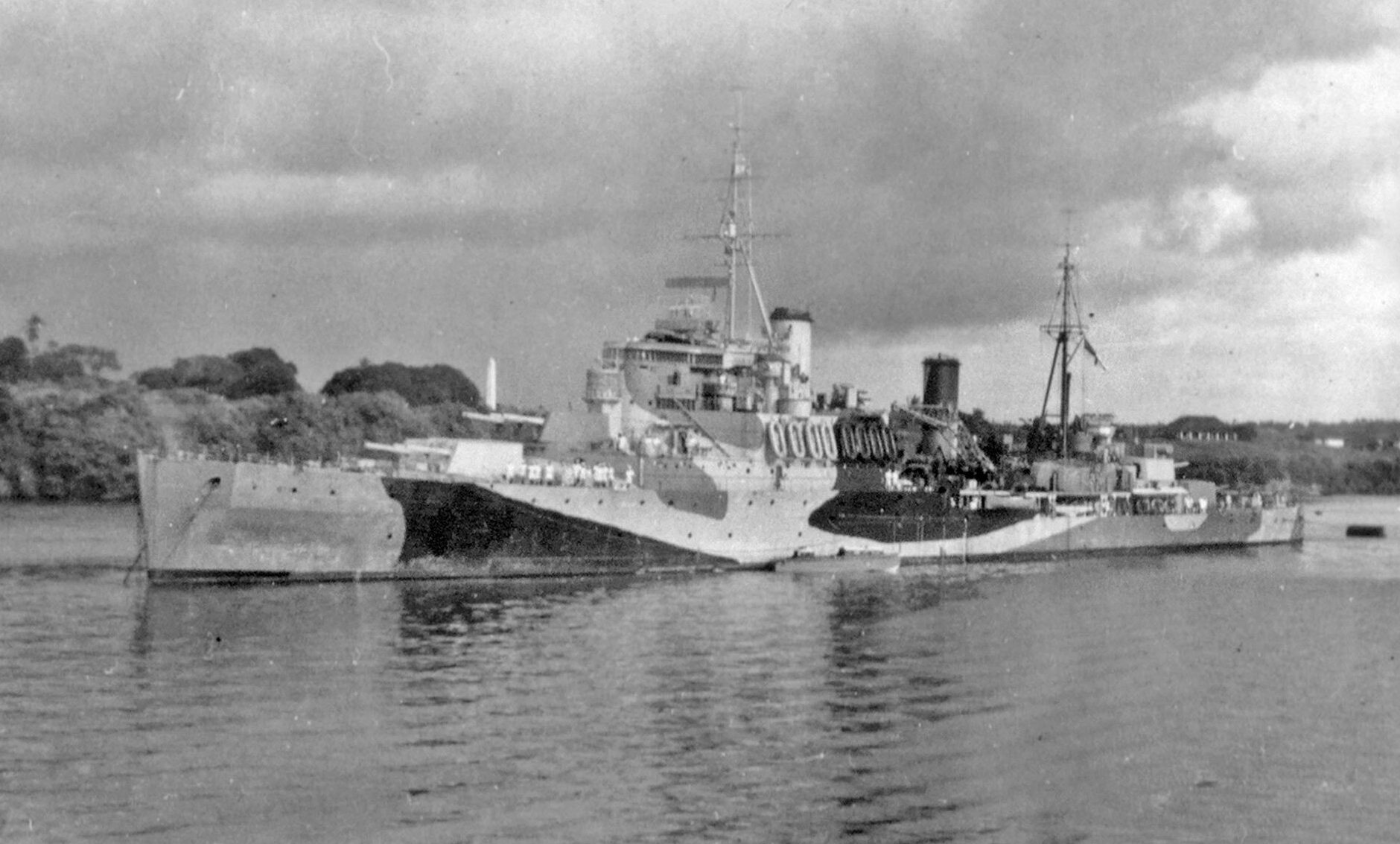
HMS Mauritius taken between 1942 and 1945 (Wikimedia Commons; Public Domain)
Second World War
At the end of 1938 he was promoted to Commander, and in early 1939 he and Doreen moved into a house in Effingham, Surrey, England. PWB was appointed to the Admiralty in 1939 at the outbreak of the Second World War and remained there until 1942 when he became Executive Officer on HMS Mauritius. During the next two years he noted in his diaries the ports of Mauritius, Alexandria, Durban, Colombo, Kalindria, Bombay and recounted exercises and missions. HMS Mauritius participated in the Sicily landings in 1943, which Brock documented in his diaries. He also provided a detailed account of D-Day as witnessed from the Mauritius. In a letter to his brother, PWB describes seeing Churchill on the deck of the ship beside them in the days following D-Day. He left the Mauritius in August 1944 and was disappointed to miss the action the ship saw later.
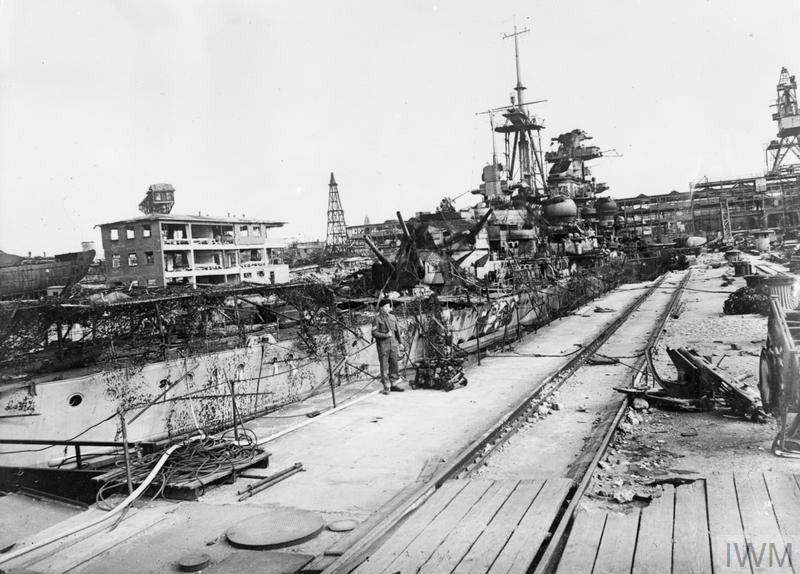
German naval base Kiel under allied control May 1945 (Imperial War Museum; A 28802; Non-commercial Use License)
Secret Project
In September 1944, PWB was assigned to a secret project under Rear Admiral Baillie-Grohman that he wrote in a letter “could shorten the war.” He flew to Germany early in 1945 on a clandestine mission with this project. This project was likely the liberation of European ports. By late 1944, Baillie-Grohman was tasked with leading specialized naval units meant to secure and rehabilitate major ports (like Kiel or Wilhelmshaven) as the Allies advanced into Germany. If the Allies could secure a major port closer to the German heartland, the logistical “tail” from Normandy would be cut, potentially ending the war by Christmas 1944. These missions were highly sensitive because they involved the capture of German naval technology (including U-boats and advanced engineering) before the Soviets could reach them. The clandestine mission may have involved flying into Germany in early 1945 to negotiate or observe the collapse of German naval defences before the official surrender. On May 8, 1945, Baillie-Grohman famously hoisted the White Ensign over the German Naval Headquarters in Kiel, becoming the Flag Officer-in-Command of Schleswig-Holstein. By 1946 PWB had the rank of Captain and was appointed Senior Naval Officer Schleswig-Holstein.
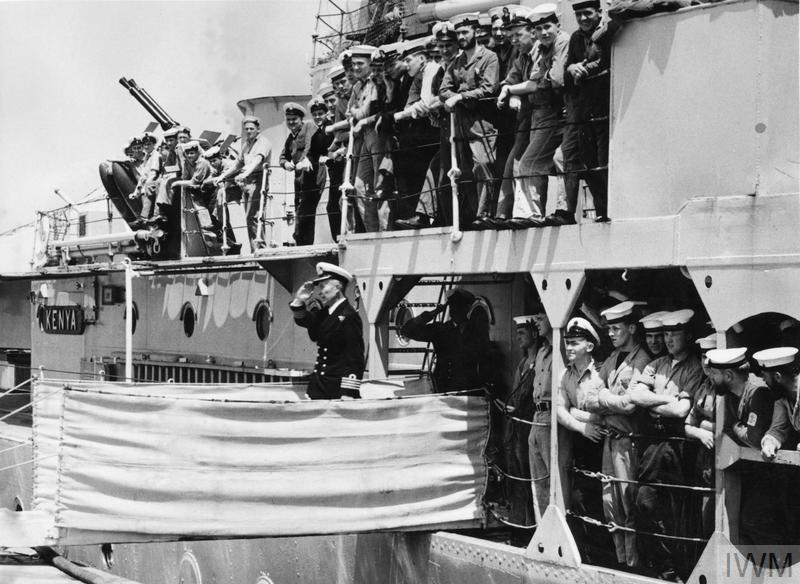
Captain P W Brock, RN, leaves the cruiser HMS Kenya at a naval base in Japan (Imperial War Museum; A 31899; Non-commercial Use License)
Post-Second World War
Brock remained in Germany through 1946 as the Senior Naval Officer for Schleswig-Holstein, operating out of HMS Royal Harold. In this role, he was instrumental in the massive logistical and diplomatic task of German naval disarmament. Upon returning to Britain, he transitioned to shore-based command, serving as the Commanding Officer of HMS Phoenicia in Malta starting in January 1948. In August 1949, Brock took command of the Crown Colony-class cruiser HMS Kenya. When the Korean War broke out in 1950, he led the ship into intense operations in the Far East. He was particularly noted for his leadership during the Inchon Landings, where he often directed Canadian destroyers (such as HMCS Cayuga and Athabaskan) alongside British forces. For his “distinguished services in operations in Korean waters,” he was awarded the Distinguished Service Order (DSO) in 1951 and the American Bronze Star.
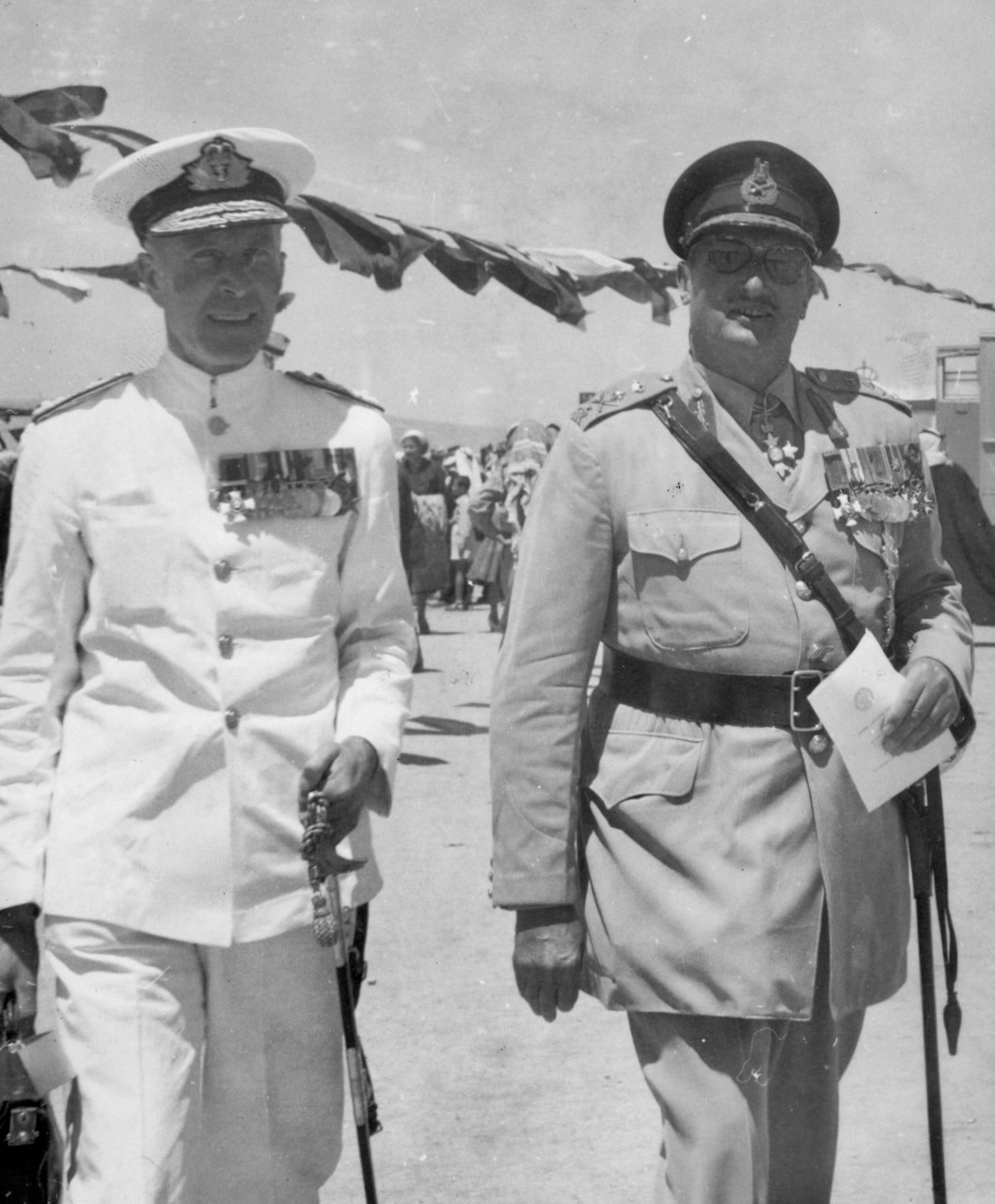
Rear Admiral PW Brock, DSO, Flag Officer, Middle East (left) with General Sit Charles Keightley, GCB, etc., Commander-in-Chief, Middle East (right) at Amman, Jordan, for Arab Legion Day, 1954 (PW Brock Collection, CFB Esquimalt Naval & Military Museum)
Admiralty & Leadership
PWB’s final years of active service were spent in the highest tiers of naval administration. As Director of Operations, Admiralty from 1952 to 1954. He returned to London to manage global naval movements during the early Cold War. Promoted to Rear-Admiral, from 1954 to 1956 he was Flag Officer Middle East. He commanded from HMS Aphrodite, where he was responsible for critical British interests in Ismailia (Suez Canal) and Cyprus during a period of intense regional instability. His career concluded as a member of the Admiralty Material Requirements Committee, where he helped shape the future of the post-war fleet. He was forced into retirement along with several other senior naval officers in 1958 and he was officially retired on January 7, 1958.
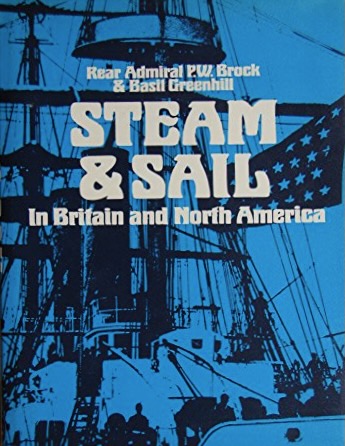
Steam and Sail: in Britain and North America, co-authored by PWB
Retirement Years
After his retirement, PWB transitioned into a prolific “second career” as a maritime historian and influential leader within the naval community. His post-war years were dedicated to the preservation of naval heritage and the encouragement of professional debate. He served as a Trustee of the National Maritime Museum (Greenwich) from 1960 to 1974, playing a vital role in one of the world’s leading maritime institutions. He was the Chairman of The Naval Review from 1967 to 1978, overseeing its role in fostering independent thought within the Royal Navy. A dedicated member of the Society for Nautical Research for over 60 years, he served on the Council and was elected Vice-President in 1970. Reflecting his Canadian roots, he was named an Honourary Trustee of the Maritime Museum of British Columbia in Victoria. Brock became a noted authority on naval history, with a particular focus on the Royal Navy’s activities in Canadian waters. He co-authored “Steam and Sail: In Britain and North America” (1973) with Basil Greenhill, which explored the maritime links and technological transitions of the 19th century. PWB’s wife, Doreen, died in North Vancouver in 1974, and he returned to England. He remarried in 1976 to Rosemary Sylvia Olive Sandberg Harrison. Rosemary was a widow with a connection to PWB’s first wife’s family. PWB lived at Kiln Cottage Critchmere Haslemere in the County of Surrey, a house he’d owned for decades, until his death in 1988.
References & Sources
For further reading or information about the sources for content on this page, visit these sites.
A significant portion of the content used in this biography and throughout this website and project come from the archives of the Canadian Forces Base Esquimalt Naval & Military Museum.
Several photographs used on this site came from the Imperial War Museum in England, which has an extensive naval collection. This site has also been used for research as it contains various collections related to PW Brock.
Nauticapedia is British Columbia virtual maritime museum and it contains data about both ships and people. This site is run by a small group of volunteers who all have strong professional backgrounds in maritime heritage.