
The Brock Family Legacy
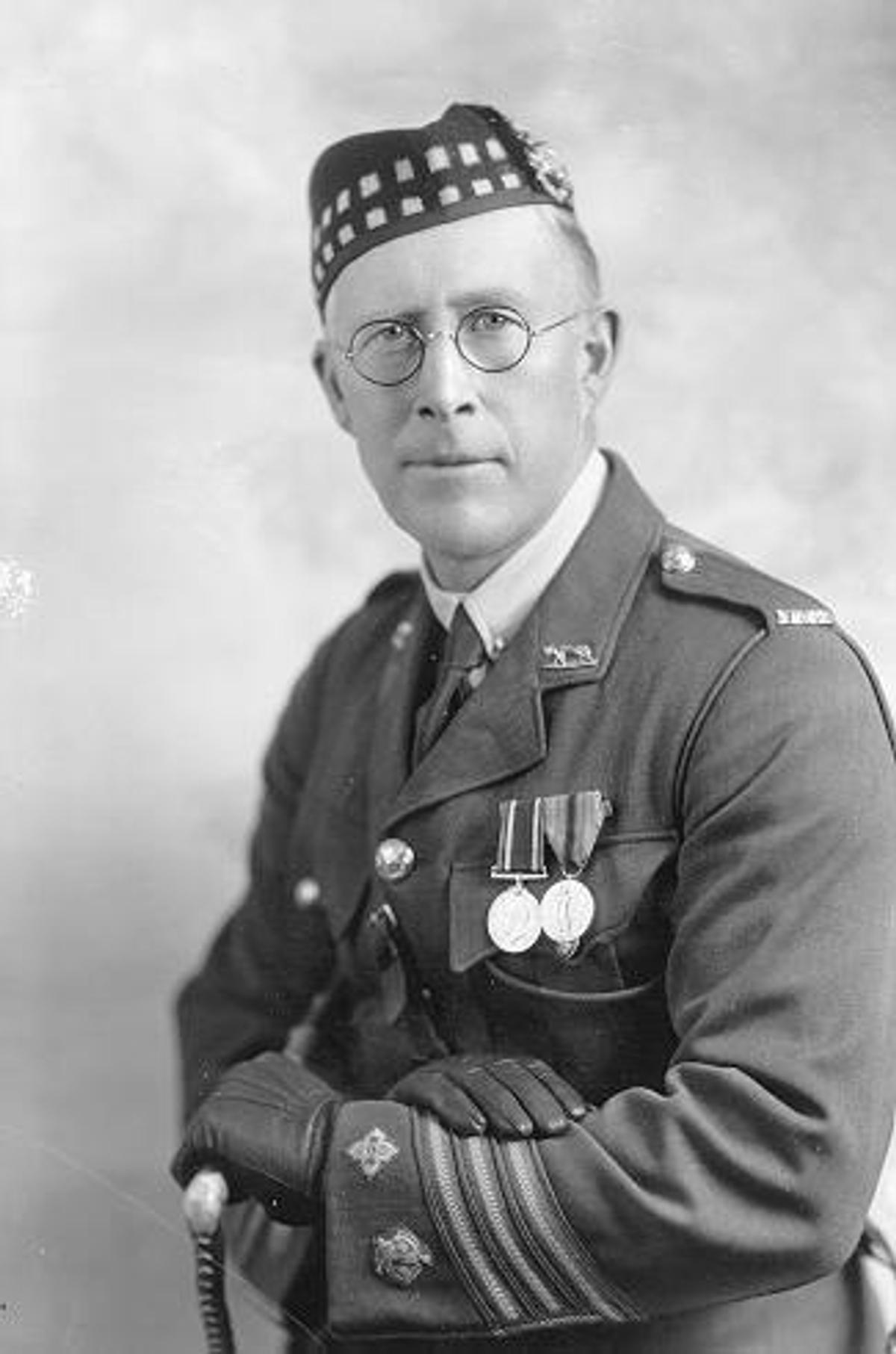
Portrait of Reginald Walter Brock (circa 1920s – University of British Columbia Archives)
Patrick Willet Brock (PWB) is not the only notable Canadian in his family.
His maternal grandfather was Byron Moffatt Britton (1833-1920), a lawyer and politician who served as a Member of the House of Commons of Canada for Kingston, Ontario from 1896 to 1901. In 1901, he was appointed a Judge of the Court of King’s Bench for Ontario.
PWB’s great grandfather, Luther Hamilton Holton (1817-1880), has been designated a National Historic Person. He was a successful entrepreneur and played a pivotal role in the development of the Grand Trunk Railway. He served in the Legislative Assembly of the Province of Canada and was briefly the Minister of Finance. He was a Member of Parliament from 1867 until his death.
Below you’ll find short biographies of PWB’s father, mother and siblings.
Reginald Water (R.W.) Brock 1874-1935
Reginald Walter Brock was a pre-eminent Canadian geologist, academic, and civil servant whose leadership shaped the nation’s scientific landscape. Born in Perth, Ontario, he was educated at the University of Toronto, Queen’s University, and Heidelberg University in Germany, establishing himself as a formidable petrographer. He served as the Director of the Geological Survey of Canada from 1907 to 1914, where he modernised the department by requiring high academic standards for field staff. In 1914, he was recruited as the first Dean of Applied Science at the newly founded University of British Columbia (UBC).
His academic career was interrupted by the Great War, during which he served as an intelligence officer under General Allenby in Palestine, reaching the rank of Major. Returning to UBC in 1919, he became a pillar of the institution and a world-renowned field geologist, notably conducting the first geological surveys of Hong Kong and Fiji. Brock was elected President of the Royal Society of Canada in 1935. Tragically, his life was cut short on July 30, 1935, when he and his wife, Mildred, were killed in a seaplane crash at Alta Lake, B.C. His legacy endures through Brock Memorial Hall at UBC and numerous geological features named in his honour, including Brock Island in the Northwest Territories and Brock River in Quebec.
Mildred Gertrude "Milly" Britton (1879–1935)
Mildred Gertrude “Milly” Britton was a central figure in one of Canada’s most distinguished academic families. Born in Kingston, Ontario, she was the daughter of Byron Moffatt Britton, a prominent lawyer and Member of Parliament who later served as a Justice of the Supreme Court of Ontario. Growing up in a household defined by civic duty and intellectual rigour, Mildred was educated at the Kingston Ladies’ Medical College—an exceptional feat for a woman of her era—though she ultimately dedicated her life to her family and community. In 1900, she married the geologist Reginald Walter Brock. As the family moved from Ottawa to Vancouver for the founding of the University of British Columbia, Mildred became a cornerstone of the burgeoning UBC faculty social circle.
She was a woman of refined tastes and resilience, raising five sons—all of whom achieved national prominence—while supporting her husband’s international geological expeditions. The Brocks were well known for their love of the outdoors, spending summers at their cottage, “Primrose,” at Alta Lake. Tragically, Mildred’s life ended alongside her husband’s in the 1935 seaplane crash at Alta Lake. Though she survived the initial impact, she succumbed to her injuries the following day. Her legacy is preserved at UBC through the Mildred Brock Memorial Room, a testament to her enduring influence on the university’s early social and cultural life. The Brock family home, where Milly held many events, is a heritage building in Vancouver called The Brock House.
Byron Britton (B.B. - Brit) Brock 1904–1972
Byron Britton Brock, known as “Britt,” was a distinguished geologist, mariner, and author who spent much of his life bridging the worlds of Canadian and South African science. Born in Kingston, Ontario, he was the second son of Reginald Walter Brock. He began his career with a blend of naval and scientific training, attending the Royal Naval College of Canada before graduating from the University of British Columbia in 1926. After earning a PhD from the University of Wisconsin in 1934, he moved to Africa, where he became a leading figure in the mining industry. As a consulting geologist, he was instrumental in developing the gold fields of the Orange Free State and the Klerksdorp district.
During World War II, Brock returned to his naval roots, serving with the Royal Naval Volunteer Reserve in East Africa and the Far East. In his later years, he became known for his “Global Approach” to geology, publishing a magnum opus that challenged conventional thinking on the Earth’s crustal patterns. A true Renaissance man, he was also a talented painter and flautist. He retired to Simon’s Town, South Africa, where he died in 1972, leaving a legacy as one of the great structural geologists of his era.
David Hamilton (D.H.) Brock 1910–1978
David Hamilton Brock (1910–1978), known to the public and his colleagues as D.H. Brock, was a versatile Canadian writer, playwright, and broadcaster. Born in Ottawa, Ontario, on May 21, 1910, he was the third son of Reginald Walter Brock and Mildred Britton. While his brothers pursued careers in science and the military, David became a prominent voice in Canadian arts and letters. He was particularly well known for his work with the CBC (Canadian Broadcasting Corporation), where he wrote and produced numerous radio plays and sketches during the “Golden Age” of Canadian radio.
His writing was celebrated for its wit and sharp social commentary. Beyond broadcasting, Brock was a prolific contributor to national magazines and newspapers, including The Beaver, Maclean’s, and Saturday Night. He frequently wrote on historical and naval themes, reflecting the interests of his distinguished family but from a literary perspective. In his later years, he resided in British Columbia, where he continued to write on regional history and archival matters. He died in Saanich, B.C., on October 20, 1978, leaving behind a legacy as one of Canada’s most sophisticated mid-century radio dramatists.
Thomas Leith (T.L. - Tommy) Brock 1912–1994
Thomas Leith Brock (1912–1993) was a Canadian chemical engineer, author, and corporate executive. Often overshadowed in historical records by his father, the famous geologist Reginald Walter Brock, Thomas carved out a distinct legacy in the Canadian metallurgical industry and through his literary contributions to military history. His educational path was a blend of military discipline and scientific rigour. He attended the University of British Columbia from 1928 to 1930 before becoming a cadet at the Royal Military College in Kingston Ontario. He graduated from the college in 1934 and was offered a commission in the British Army (Royal Artillery) but declined it to pursue further engineering studies.
He returned to UBC to complete his BA and BASc in chemical engineering. He later pursued advanced studies at the Massachusetts Institute of Technology (MIT). Thomas spent his entire 40-year career working in the aluminum industry. Thomas was an active writer, primarily focused on the history and culture of the Royal Military College. Shortly after his graduation in 1934, he wrote a book of cadet reminiscences titled Queer Doings at R.M.C.. He remained a dedicated alumnus, frequently contributing to eVeritas and other military college publications, documenting the traditions and social history of the “Old RMC.”
Philip Holton Gilbert (Pip) Brock 1914–1995
Philip Holton Gilbert “Pip” Brock (1914–1995) was the youngest of the five sons of Reginald Walter Brock. Born in 1914, he became a celebrated figure in British Columbia’s mountaineering and skiing history, known for his adventurous spirit and lifelong connection to the Whistler area. While his brothers established themselves in naval service, engineering, geology, and broadcasting, “Pip” gained fame as a pioneer of the outdoors. In 1933, he made the first reported ascent and descent of Whistler Mountain on skis, using equipment he later self-deprecatingly described as “terrible things.” His passion for the mountains led him to join legendary climbers Don and Phyllis Munday on significant expeditions, including a notable attempt on Mount Waddington and the first ski ascent of Wedge Mountain in 1937.
During the Second World War, Pip followed the family tradition of service, joining the Royal Canadian Navy. He served as an officer throughout the conflict, including time spent in the North Atlantic. After the war, he remained active in the naval reserve and was involved in the maritime community in British Columbia. He spent much of his later life preserving the history of his family’s beloved “Primrose” cottage at Alta Lake and documenting the early days of Canadian mountaineering. He died in 1995, remembered as a true pioneer of the Coast Mountains.
References & Sources
Following are links for the sources of information provided here or for further reading.
The Brock House, named for PWB’s family, is a Samuel McLure-built home in Vancouver, which the Brock family lived in during the 1920s and 1930. The house is now used as a senior’s centre and event venue. The Brock House Society website has a short history of the family that includes photographs.
Read about PWB’s parents, their deaths and their funeral procession in downtown Vancouver, which was attended by thousands of spectators, on the Vancouver as it Was blog.
Read about Reginald Walter Brock at the Dictionary of Canadian Biography.
The Geological Society of America has published a memorial booklet for RW Brock.